
Experts Stress Science-Based Strategies for Human–Elephant Coexistence in Odisha
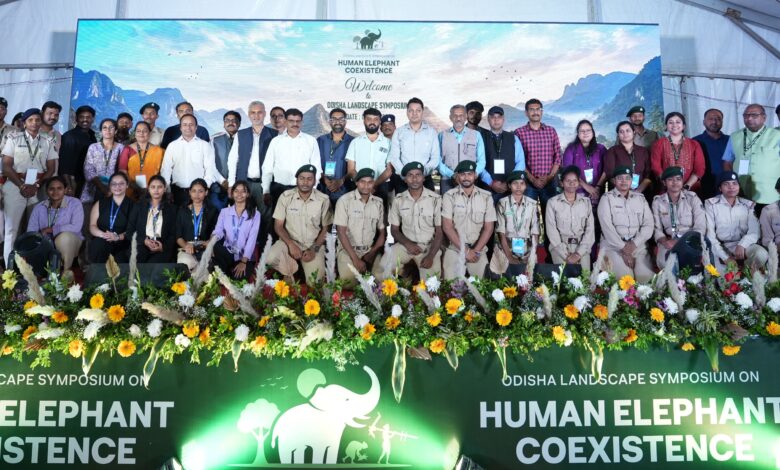
Kapilash: With human elephant encounters increasing across forest landscapes, experts have emphasised the need for science-based planning and community-driven strategies to ensure safe coexistence between people and elephants in Odisha. These issues were discussed at the Odisha Landscape Symposium on Human–Elephant Coexistence held at Kapilash, which brought together scientists, forest officials, conservation practitioners and field staff to deliberate on practical solutions for managing human–elephant interactions across the state.
Addressing the gathering, Dhenkanal DFO Sumit Kumar Kar stressed the importance of shifting from reactive conflict response to proactive and science-driven strategies. “Human–elephant conflict has emerged as one of the most complex conservation and rural livelihood challenges in India. Addressing it requires coordinated efforts, scientific understanding and active community participation,” he said. He also suggested organising similar symposiums across other forest divisions to strengthen knowledge-sharing and collaboration.
Senior forest officials from several conflict-prone divisions participated in the symposium, including Divisional Forest Officers (DFOs) Jadhav Sudarshan Gopinath of Sambalpur, Dr. Elavarasan of Rairakhol, Manu Ashok Bhat of Jharsuguda and Ladu Gajanan Dayanand of Khurda. Assistant Conservators of Forests and forest rangers from different regions also attended, sharing field experiences and operational challenges in dealing with human–elephant conflict. Dr. B. Navaneethan of WWF spoke about behavioural mapping and profiling of elephants, which can help forest departments track high-risk individuals and manage conflict more effectively. Wildlife veterinarian Dr. N. S. Manoharan highlighted emerging diseases affecting elephant populations and the importance of wildlife health monitoring.
The inaugural session was attended by Sangram Keshari Behera, Director of Odisha Forest Rangers College; Sumit Kumar Kar, Divisional Forest Officer, Dhenkanal; Praveen A from GMR Energy; Ramasamy Krishnan, Executive Director of SNEHA; and senior wildlife veterinarian Dr. N. S. Manoharan.
Experts noted that rising conflict often reflects deeper ecological changes. Elephants require large, connected habitats with diverse vegetation and reliable food resources. However, increasing habitat fragmentation due to agriculture, infrastructure expansion and settlement growth is forcing elephants to move through human-dominated landscapes. Speakers highlighted that improving habitat quality, restoring grasslands and securing ecological corridors are key to reducing pressure on agricultural areas and enabling safer elephant movement.
During the symposium, experts from various organisations shared experiences from different elephant landscapes across India. Dr. Laxminarayanan Natarajan, former member of the Elephant Cell at the Wildlife Institute of India, discussed the impact of habitat fragmentation and land-use changes on elephant movement. Dr. Ragunathan Ganesh of the Nature Conservation Foundation presented insights from southern India landscapes, while Upasana Ganguly of the Wildlife Trust of India highlighted the importance of protecting elephant corridors threatened by highways, railways and irrigation canals.
Community-based mitigation strategies were also emphasised. Experts highlighted the role of alternative cropping patterns, early warning systems and local community participation in reducing crop losses and improving conflict response. Technology-based solutions to detect and prevent elephant electrocution were also demonstrated.