
ASSOCHAM India Mines & Minerals Conclave 2026
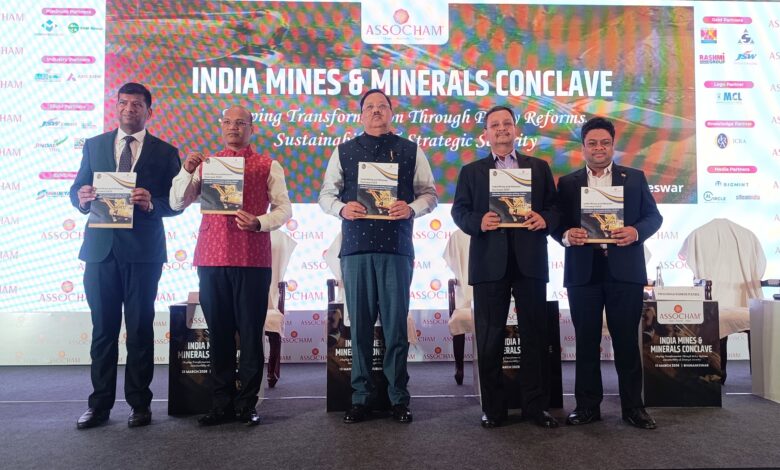
Bhubaneswar: The Associated Chambers of Commerce and Industry of India (ASSOCHAM) convened the India Mines & Minerals Conclave 2026 on the theme “Shaping Transformation Through Policy Reforms, Sustainability & Strategic Security” at Swosti Premium, bringing together policymakers, industry leaders, regulators and technology innovators to deliberate on the future of India’s mining and minerals sector.
Addressing the conclave as Chief Guest, Mr. Arun Kumar, Regional Controller of Mines, Indian Bureau of Mines said, India’s aspiration of becoming a $5 trillion economy will significantly increase the demand for minerals, especially critical minerals required for clean energy and industrial growth. He noted that the government has undertaken several reforms to accelerate growth in the mining sector, marking a clear shift from regulation to facilitation. “Government priorities today lie at the intersection of economic growth, environmental sustainability and strategic security of critical minerals,” he said.
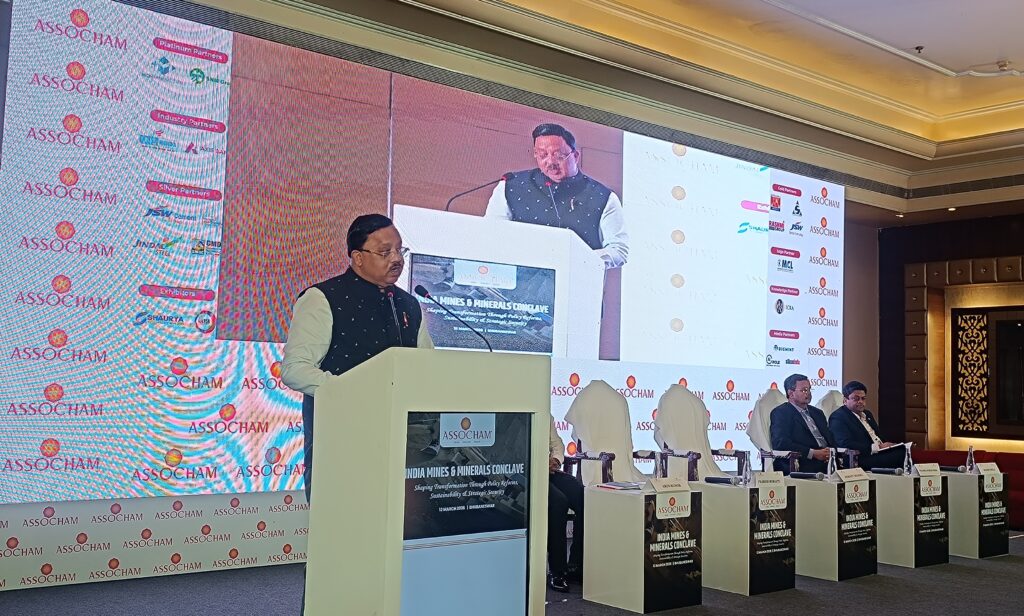
Mr Kumar emphasised that as the world rapidly transitions towards green energy, minerals such as lithium, cobalt and nickel are becoming strategically vital for nations. India is therefore strengthening domestic exploration, securing supply chains and encouraging value addition within the country.
Highlighting future demand, he said achieving the steel production targets under the 2030 mission would require 400–450 million tonnes of iron ore, making it necessary to accelerate mine auctions and operationalisation of mineral blocks. “To achieve the vision of Viksit Bharat, reforms in the mining sector must move at a much faster pace,” he added.
Delivering the welcome address, Mr Prabodh Mohanty, Co-Chairman, ASSOCHAM Odisha State Development Council and Chairman of SNM Group, said, “Odisha remains one of the country’s most significant mining and mineral hubs. He noted that the state has generated nearly ₹1.5 lakh crore in mining revenue over the past decade, contributing substantially to India’s economic development. Odisha today accounts for around 25 percent of India’s steel production, reinforcing its position as the steel capital of India.”
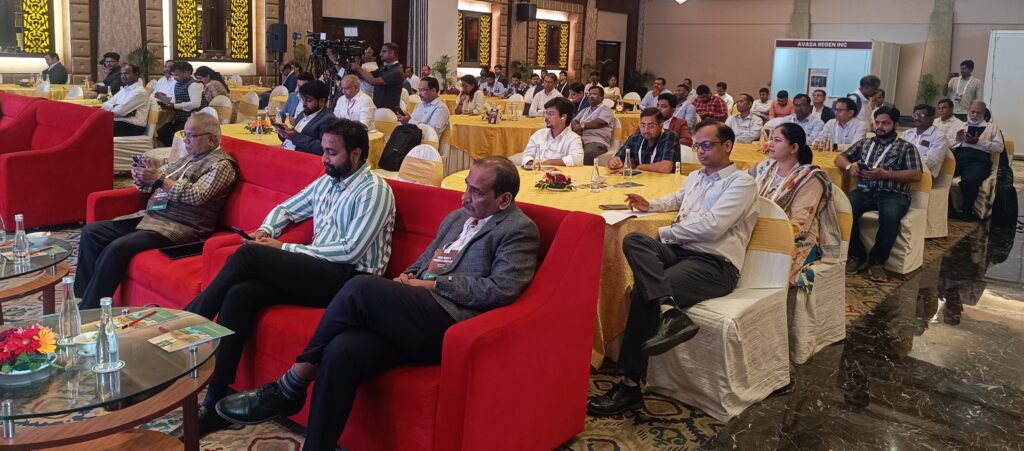
Mr Mohanty also highlighted the state government’s focus on strengthening logistics and connectivity while accelerating exploration and auctioning of critical minerals. These minerals are essential for emerging sectors such as electric vehicles, semiconductors, defence and aerospace. Odisha, he said, has the potential to play a key role in minerals like lithium and cobalt, helping India reduce import dependence.
In his industry address, Mr Prasanna Kumar Panda, Member of the ASSOCHAM Odisha State Development Council on Mines and Minerals and Business Head (Odisha Business) at JSW Steel, highlighted various aspects of the National Critical Mineral Mission. He pointed out that several minerals previously under the Department of Atomic Energy have now been deregulated to promote exploration. Many critical minerals are found in coastal states like Odisha and Andhra Pradesh.
Mr. Panda also noted that the government has eased certain regulatory requirements, including exemptions from public hearing in specific cases, to promote exploration and development of critical minerals. He added that policy reforms for minerals such as nickel and copper are aimed at making the sector more accessible for private investment and accelerating domestic production, including lithium, to enhance India’s self-reliance.
Speaking on industry challenges, Mr Manish Singla, Head – Mineral Auction, Strategy, Mergers and Acquisitions at Jindal Steel & Power (JSP), said that while steel production and consumption are growing steadily, the supply of iron ore – the key raw material for steelmaking – remains inadequate. Despite having abundant reserves, India imported 10–12 million tonnes of iron ore last year, he noted.
Singla highlighted that Odisha aims to increase its steel production capacity to 100 million tonnes per annum by 2030, from the current 42–45 million tonnes. Achieving this target will require a proportional increase in iron ore production and supply. He also pointed out that the premium paid by mining operators for mineral blocks in Odisha has been rising sharply, and urged the government to bring more mineral blocks to auction to meet the raw material requirements of steel, pellet and sponge iron plants in the state.
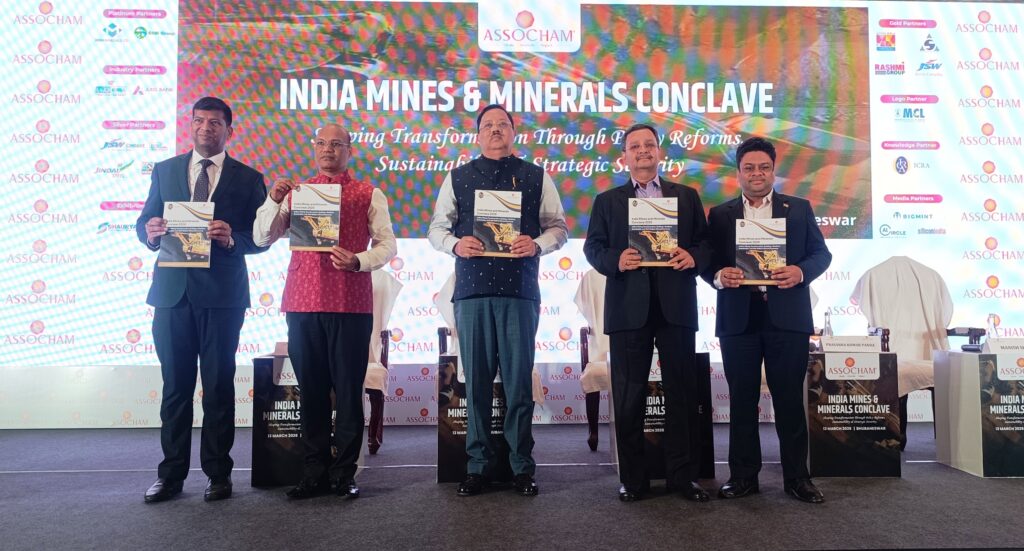
During the conclave, ASSOCHAM also released a Knowledge Report on the mining and minerals sector. The conclave featured three substantive panel discussions focusing on policy, strategic minerals and technological transformation in mining.
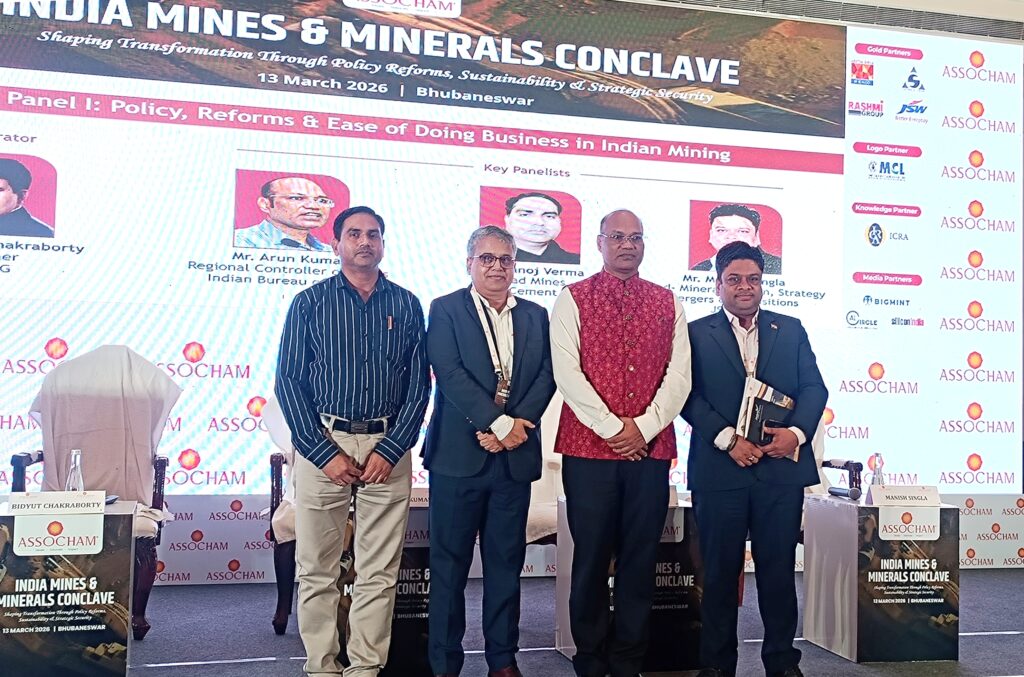
Panel on Policy, Reforms & Ease of Doing Business in Indian Mining, moderated by Mr Bidyut Chakraborty of KPMG, examined key reforms in mining laws, auction frameworks and clearance mechanisms. The panel included Mr Arun Kumar from the Indian Bureau of Mines, Mr Manoj Verma, Head of Mines at Shiva Cement Ltd and Mr Manish Singla of Jindal Steel & Power.
Panel on Critical Minerals & India’s Strategic Resource Security, moderated by Sumit Jhunjhunwala, Vice President and Sector Head – Mines & Minerals at ICRA Limited, focused on India’s Critical Minerals Mission, domestic extraction challenges and the geopolitical dimensions of mineral supply chains. Panelists included Nitin Gupta, CEO and Co-founder of Attero Recycling, Sabyasachi Mohanty, former Director (Operations) at Odisha Mining Corporation, and Kali Sanjay, Chief Scientist at CSIR-IMMT.
Panel on Technology, Safety & Sustainable Mining, moderated by Mr Pranab Kumar, Technical Director at KPMG, explored the role of artificial intelligence, automation, drones, digital mine planning and low-emission technologies in improving mining productivity and safety. Speakers included Mr Ashit Kumar Swain, Director (Geology) at Geological Survey of India, Mr R Bhima Rao, Former Chief Scientist at CSIR-IMMT and Director of Aryan Institute of Engineering & Technology, Bhubaneswar and Mr Priyadarshi, Vice President at Sainik Mining & Allied Services Ltd.
The conclave underscored the importance of policy reforms, sustainable resource management and technological innovation in ensuring India’s long-term mineral security and strengthening the country’s industrial growth trajectory.